Context Essay
1960's decade
1960's decade
Social developments:
Life of young people in the 1960’s
Basically, most of new fashions, sub-cultures, violent facts and change of attitude started in this decade. As well as the advance in technology, there were main facts that involved changes in the politic that affected the society.
The music industry from this decade was influenced by this facts. Let’s Start talking about the youth as the beginning of the main point of view from this decade, so that when the teenagers were influenced by this new changes the next generations from the following decade would have a different view about life, culture, society and politic.
Young people in the 1960’s, started to demand more freedom about social relations and fashion. For example, the use of short skirts and blazer jackets was a symbolic change that identified this characteristic in the 1960’s as a way of interpreting a new way of thought for this generation.
The development of new social groups or sub-cultures, such the well-known as the rockers and the mods that usually were creating some chaos in small towns, fighting and creating a kind of differences in between them that therefore, created conflicts in between them.
Rockers:
The rocker is a Sub-culture that was well-known for being very rebel and for thinking with a whole freedom, which provoked many changes in the social culture from the decade. I would say that this kind of culture shows an aggressive union and a deep feeling of movement. As well as their own sense of fashion that was emphasised in identifying them, that then was iconic for society as a new subculture, because obviously, not everyone belonged to this subculture but everyone knew them. In order to this I want to say that for example If we look at blazer jackets or this kind of cloth that they used to wear, we can think straight away about them, because they were the people who popularised this way of wearing.
"Rockers, leather boys, Ton-up boys, and possibly café racers are members of a bike sub-culture that originated in the United Kingdom during the 1950s. It was mainly centred on British cafe racer motorcycles and rock and roll music. By 1965, the term greaser had also been introduced to Great Britain and, since then, the terms greaser and rocker have become synonymous within the British Isles although used differently in North America and elsewhere. Rockers were also derisively known as Coffee Bar Cowboys.Their Japanese equivalent was called the Kaminari-zoku (Thunder Tribe)."
-By WIKIPEDIA.
Their characteristics were basically the following:
- Rockers bought standard factory-made motorcycles and stripped them down, tuning them up and modifying them to appear like racing bikes.
- The motorcycle was used as an object of intimidation and masculinity projecting them uneasily close to death.
- Rockers wore heavily decorated leather motorcycle jackets, often adorned with metal studs, patches, pin badges.
- They usually wore not a helmet or wore a classic open-face helmet, aviator goggles and a white silk scarf when they were driving the motorcycle.

- They used to wear a patch declaring membership of the 59 club of England.
- The rocker hairstyle, kept in place with Brylcreem, was usually a tame or exaggerated pompadour hairstyle, as was popular with some 1950s rock and roll musicians.
- T-shirts, leather caps, Levi's or Wrangler jeans, leather trousers, tall motorcycle boots.
- the rockers were not widely welcomed by venues such as pubs and dance halls.
- They were generally reviled by the British motorcycle industry and general enthusiasts as being as an embarrassment and bad for the industry and the sport.
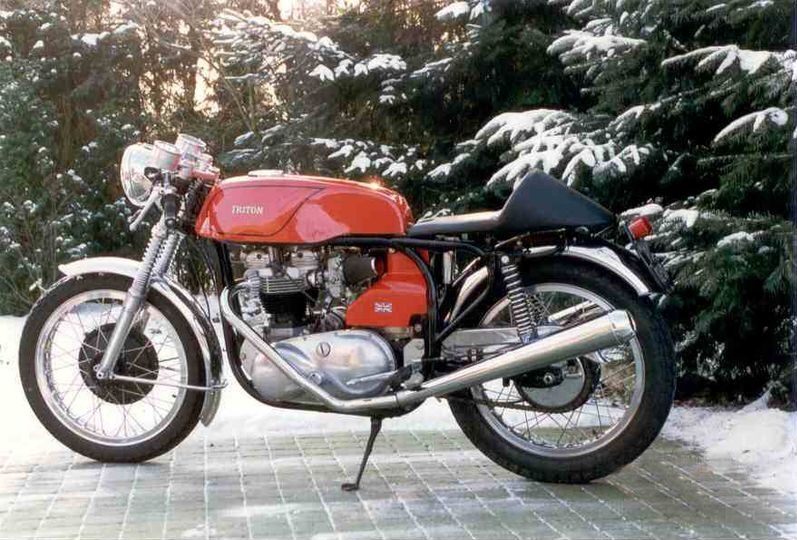
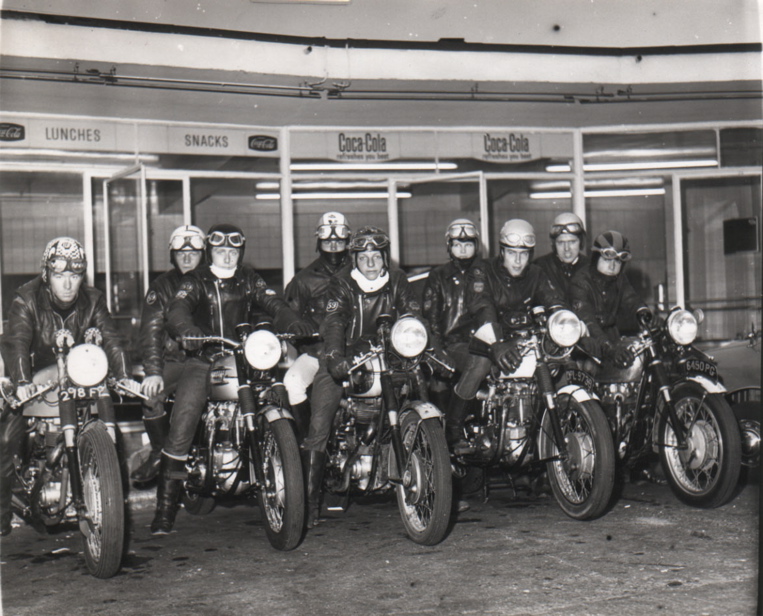


- By WIKIPEDIA.
The Mods:
The mods are a British sub-culture that started in London in 1958 influencing fashions and trends in other countries.
"Mods were initially a small group of clothes-focused English working class young men insisting on clothes and shoes tailored to their style, who emerged during the modern jazz boom of the late 1950s. Early mods watched French and Italian art films and read Italian magazines to look for style ideas. They usually held semi-skilled manual jobs or white-collar positions such as a clerk, messenger or Office boy. According to Hebdige Mods created a parody of the consumer society that they live in."
- By George Melly
Their characters are the following:
- They aimed at being "cool, neat, sharp, hip, and smart".
- Many female mods dressed androgynously, with short haircuts, men's trousers or shirts, flat shoes, and little makeup — often just pale foundation, brown eyeshadow, white or pale lipstick and false eyelashes.
- Male mods adopted a smooth, sophisticated look that included tailor-made suits with narrow lapels, thin ties, button-down collar shirts, wool or cashmere jumpers, Chelsea or Beatle Boots, loafers, Clarks desert boots, bowling shoes, and hairstyles that imitated the look of French Nouvelle Vague film actors.
- Mods chose scooters over motorbikes partly because they were a symbol of Italian style and because their body panels concealed moving parts and made them less likely to stain clothes with oil or road dust.
- the subculture had strong elements of consumerism and shopping, mods were not passive consumers.
- they started customising "existing styles, symbols and artefacts" such as the Union flag and the Royal Air Force roundel, and putting them on their jackets in a pop art-style, and putting their personal signatures on their style.


Why were they important in this decade?
When I am talking about this two contrasting and symbolistic cultures from this decade, basically I am talking about the influences that they had forward the artists and bands from the decade.
For example, The rockers influenced the style of great groups from the decade, such as the Beatles because of the rockers' look and attitude. Also, the rockers influenced funk and hard rock groups from the decade for their style that then the fans from this groups were influenced by this fashion and attitudes (aggressive behaviour, own control and rebel thought).
Young people usually had more money than ever, this was something very important, as a character in the 1960’s, because this gave them opportunities for buying and spending money in the way that they wanted, giving them a kind of confidence and feeling of power over them.
We could contrast the fact that young people represented a rebels generation which was not afraid of showing their unconformity with the war in Vietnam, which created a peaceful protest in Grosvenor street in London, outside of the embassy. Then, it finished as a violent act that caused fights in between people and police. This not only represented a fight with police and society, this actually represented a social union that developed a different behaviour against the fare and respect forward the government. This kind of new behaviour influenced an introduction of new genres and styles of music. New artists ware born into the music industry, giving an advance to the future of the music.
Swinging:
This is a youth-driven cultural revolution and a very important fact that changed the future for youth in London. I would say that after the abolition of the military service for men, most of the people took the control of their life aimed to have fun and enjoy. The attitude that teenagers took by the post-war was very positive and they acted as if they were overcoming and experimenting life.
The main target of this new culture was to emphasised the future in modernity and fun-loving hedonism. The end of the war environment and fare was on a lower scale and the demand of colourful and confident time was arriving.
Youth people dominated fashion, but they took an extremism of over spending money in shopping. The popular places where this happened were King's Road, Kensington and Carnaby street. On top of that, the phenomenon was caused by a large number of young people in the city and the post-war economic boom.
A very important characteristic of this movement was the social changes and sexual politics, the freedom and fewer responsibilities that teenagers had with his parents. The money that they used to earn, the did not help very much at home with basic bills, just they were spending the money on clothes and fun.
"During the time of Swinging London, fashion and photography were featured in Queen magazine, which drew attention to fashion designer Mary Quant. Mod-related fashions such as the miniskirt stimulated fashionable shopping areas such as Carnaby Street and King's Road, Chelsea."
- Wikipedia.
Technological developments
The timeline of the technology of the decade is very wide. here I have added a detailed timeline of the development year to year in the decade.
1960
| The Laser. They had no idea that it would someday be used to remove tattoos. |
| Halogen Lamp |
| Implantable Heart Pacemaker. The actual Pacemaker was invented in 1950 it was however an external device. |
| Weather Satellite. USA Tiros I. |
| Etch A Sketch Not an artist, just shake it and start over.. |
1961
| Valium Anti-Anxiety Drug. Mothers Little Helper!! |
| Non dairy Creamer. News flash – Cows revolt all over the world |
| Cochlear Implants. What did you say? |
| Human Spaceflight. Cosmonaut Yuri Gagarin orbited the Earth one time aboard Vostok 1. |
1962
| Audio Cassette. The Philips Company named it “Compact Cassette” |
| Fiber-Tip Pen Otherwise known as a felt tipped pen or “Flair” |
| Spacewar – the first Computer Video Game. |
| Silicone Breast Implants. by Dow Corp, – was Pamala Anderson the first to try them? |
| The LED – Light Emitting DiodeSpace Observatories, by Ball Brothers Aerospace Corp.- they were looking for the crew of “Lost in Space” |
1963
| Touch-tone Telephone. It had 10 buttons, * and # were added later |
| Computer Mouse.invented by Douglas Engelbar it would not be used with personal computers until 1980 |
| Zip Codes. Ever wonder what “ZIP” stands for – Zoning Improvement Plan – now you know! |
| Pull Tab for soda cans. Actually Patented in ’63 but invented in ’62 by Ermal Cleon Fraze |
| Easy-Bake Oven. A learning toy, molding young Martha Stewarts. |
| Astro Lamp (Later called the Lava Lamp) |
1964
| BASIC, computer programming language. I know that you’re dying to know – Beginner’s All-purpose Symbolic Instruction Code |
| Wonderbra. It didn’t gain any popularity until the 1990’s. Why Not!! |
Smiley Face. Originally drawn to put a good spin on the merger between two Insurance Companies.  |
| Picturephone Introduced at the 1964 World’s Fair in NY, it allowed you to see the caller and them to see you. |
| The Ford Mustang. No it wasn’t really an invention but I liked them so it’s listed here! |
1965
| Astroturf. Originally called “Chemgrass” the name was changed in ’66 when it was used in the Houston Astrodome. |
| Smoke detector for home use. First invented in the ’40’s but those were quite large and quite expensive. |
| Aspartame, the chemical compound found in NutraSweet. It took the FDA 15 years to approve this for human consumption. |
| Compact Disc. Invented and patented in ’65 it wouldn’t be used commercially until ’81 (why to change, we had eight-tracks right.) |
| Super Ball. By Wham-O Manufacturing Co the fine folks who brought us the Hula Hoop and the Frisbee. |
1966
| Kevlar. Best known for its use in bulletproof vests. | |
| Fiber Optics. A new way of fusing glass strands together paved the way for long-distance fibre communications. | |
| Video Game. Video games wouldn’t be commercially available until ’72 and wouldn’t be popular until ’75. | |
|
1967
| Handheld Calculator. Developed by Texas Instruments it was made possible by their invention of the integrated circuit in 1958. |
| Countertop microwave oven. Named “Radarange” it was made by Amana and later became my best friend! |
| ATM (Automated Teller Machine) First used in the UK this machine changed banking forever. |
| Heart Transplant. The first successful human donor heart transplant by Christiaan Barnard in Cape Town South Africa the patient lived for eighteen days. |
1968
| DRAM Computer Memory. (Dynamic Random Access Memory) on a single circuit chip |
| The First 911 call. the system implemented in Haleyville, AL. beating AT&T to the punch by six months |
| First Supersonic Airliner. Soviet Tupolev Tu-144 achieves supersonic speed |
| The First Manned Lunar Orbit. Apollo 8 successfully orbits the moon with three astronauts on board |
1969
| ARPA Net. (Advanced Research Projects Agency). This is the precursor to the Internet |
| UNIX. a computer operating system developed by Bell Labs |
| The Single-Chip Microprocessor. The Intel 4004 was as powerful as any complete computer available at that time |
| Man Lands on the Moon. Not so much an invention but for Neil Armstrong and Buzz Aldrin it was certainly “One Small Step For Man, One Giant Leap For Mankind” |
Taken from http://fiftiesweb.com/pop/inventions-60/
Relevant world events
14 January 1963
France vetoes Britain's entry to the European Common Market
President of France Charles de Gaulle announced the French veto on Britain's application to join the European Common Market, the forerunner of the European Union. De Gaulle said the British government lacked 'commitment' to European integration.
October 1963
New universities open and students get state support
The Robbins Report on Higher Education (1963) was followed by the state-funded growth of universities. Government support was seen as necessary, not least in order to change the social composition of the student body. State-paid fees and maintenance were designed to help increase the percentage of working-class students. New universities were established, including Essex, Lancaster, Kent and Sussex.
19 October 1963
Conservative Sir Alec Douglas-Home becomes prime minister
Sir Alec Douglas-Home became Conservative party leader and prime minister following the resignation of Harold Macmillan on health grounds. He became the fourth Conservative prime minister since 1951. The preceding three - Winston Churchill, Anthony Eden and Macmillan - all resigned for a variety of reasons.
1963
Kennedy Assassination
1963
The Great Train Robbery
1964
Abolition of Resale Price Maintenance prompts the rise of supermarkets
Resale Price Maintenance (RPM) obliged shops to sell goods at standard prices set by suppliers, and thus prevented the search for better business through undercutting. This helped small independent shopkeepers in their resistance to larger traders. Abolition of RPM opened the way to the rise of supermarkets and the transformation of the retail industry.
15 October 1964
Labour wins the general election, with Harold Wilson as prime minister
Labour, under Harold Wilson, narrowly won the general election, with 317 seats to 304 for the Conservatives. Considered something of an intellectual, Wilson successfully contrasted his 'meritocratic' beliefs against his 'establishment' opponent, Conservative Alec Douglas-Home.
12 July 1965
Comprehensive education system is initiated
Circular 10/65', issued by the Labour government's education secretary, Anthony Crosland, obliged local education authorities to draw up plans for replacing the existing division between 'grammar' and 'secondary modern' schools in order to create all-inclusive 'comprehensive' schools. It represented the first step towards a comprehensive education system that served all pupils on an equal basis.
8 November 1965
Death penalty is abolished
The abolition of the death penalty for murder - one of the few remaining crimes for which capital punishment could still be handed down - effectively meant the final abolition of the death penalty. This was a major symbolic act in the reduction of the power of the state. The death sentence for treason and piracy with violence remained on the statute books until 1998 when they were abolished by the Crime and Disorder Act.
31 March 1966
Labour strengthens its parliamentary position in the general election
Labour's share of the vote went up from 44.1% in the 1964 general election to 48%, and the Conservatives down from 43.4 to 41.9. The shift in seats, from 317 to 364, compared with 304 to 253, was more dramatic, leaving Harold Wilson, the Labour prime minister, with a much-improved majority of nearly 100.
30 July 1966
England win the football World Cup
England defeated West Germany in the World Cup final, which was held at Wembley and watched by 93,000 people in the stadium and 400 million people around the world on television. Geoff Hurst became the first - and thus far only - player to score a hat-trick in a World Cup final when he powered home his third goal in the final moments of extra time, giving England a decisive 4-2 victory.
1967
Abortion and homosexuality are legalised
A number of Acts of Parliament in this period reflected the changing social climate. As well as the 1967 Sexual Offences Act, which legalised homosexuality between men over 21, and the 1967 Abortion Act which legalised abortion under certain conditions, there was also the 1969 Divorce Reform Act and the 1970 Equal Pay Act.
1 June 1967
Beatles release 'Sgt. Pepper's Lonely Hearts Club Band'
This was the Beatles' eighth album and is widely recognised as one of the most influential records ever released. The album was heavily influenced by the group's increasing use of drugs, and enjoyed immediate critical and popular success at the start of the 'psychedelic era'. Peter Blake's college for the album cover has become iconic.
2 March 1969
Concorde, the world's first supersonic airliner, makes its maiden flight
The first supersonic (above the speed of sound) airliner was developed jointly by Britain and France. It did not begin commercial flights until 1976. The fleet was grounded in 2000 after Concorde's first and only major fatal accident in July of that year. Concorde was finally retired in 2003.
taken from http://www.bbc.co.uk/history/british/timeline/present_timeline_noflash.shtml
(I have decided to paste this information from this page because I think that this information is very complete, organised and reliable.)
Model of the music industry
The music industry from this decade was involved in the evolution of the British hard rock, blues and pop that involved the famous "British invasion".
"The British Invasion is a term used mainly in the United States to describe a large quantity of rock and roll, beat and pop performers from the United Kingdom who became popular in the U.S.A. from 1964 to 1966."
- Wikipedia.
The model of this music industry was about to export the music abroad and trying to get the fame as much as they could. but in a way, the audience used to interact with the music along with the technology advance. The used to manufacture the material and selling it in music's stores on CD that the photograph could play with.
"By the early 1960s the British had developed a viable national music industry and began to produce adapted forms of American music in Beat Music and British Blues which would be re-exported to America by bands such as The Beatles, The Animals and Rolling Stones."
"which began to develop into diverse and creative subgenres that would characterise the form throughout the rest of the twentieth century."
- Wikipedia.
In the 1960's were lots of advance in labels and recording, in here I have added the following statements about this music industry:
- By the end of the 1960's, the top major labels were CBS, Warner Brothers, RCA Victor, Capitol-EMI, PolyGram and MCA.
-The Beatles formed Apple Records in 1968.
- Chrysalis was formed in 1969 by Chris Wright and Terry Ellis, who were partners in managing Jethro Tull and Ten Years After. It was the licensing deal they made with Island Records, that led to the creation of Chrysalis.
- In the late sixties, Philips reorganized its UK labels, emphasizing Mercury and Vertigo while phasing out Fontana.
-The Beatles, who had already been a phenomenon in their homeland of Great Britain for a few years, began topping the American charts starting with "I Want to Hold Your Hand" in February 1964. Their success created a wave called the British Invasion.
-Colpix Records was established in 1960 as the record division of Columbia Pictures.
- United Artists was purchased by Transamerica Corporation in 1967.
- The second world war had vastly improved communication technology and shown many people that the world was smaller than they thought, with the first suggestion of a global community. Improvements from morse code where a sound synthesiser was needed to produce the tone were adapted by musicians to create the first polyphonic synthesisers attached to a keyboard to create surreal and out of this world sounds on the multi-track recordings.
The Beatles and The Rolling Stones were arguably the biggest bands of the 1960s. Both bands started their careers in the early 1960s in the United Kingdom and rose to fame as part of the British invasion. The Beatles rose to fame in the UK in 1963 with their singles "Please Please Me" and 'Love Me Do".
- United Artists was purchased by Transamerica Corporation in 1967.
- The second world war had vastly improved communication technology and shown many people that the world was smaller than they thought, with the first suggestion of a global community. Improvements from morse code where a sound synthesiser was needed to produce the tone were adapted by musicians to create the first polyphonic synthesisers attached to a keyboard to create surreal and out of this world sounds on the multi-track recordings.
- Elvis Presley, his UK counterpart Cliff Richard and then The Beatles all capitalised on them. Elvis was the epitome of musician-focused international audience delivered through record sales and promoted through live performance. Cliff Richard developed a similar trait in the UK market and The Beatles brought together their own songwriting, with their performances, massive international record sales and expansive promotional live performance touring.
- Having caught the attention of some wealthy people who noticed the record sale levels, the recording industry began to receive much larger investments, enabling elaborate stage shows for promotion, manufacture of large volumes of records that were distributed worldwide and lucrative recording contracts with talented artists.
How industry and society shaped the music that came from the decade.
The society was the biggest influence to the music industry because the post-war. After the beggining of the famous swinging and creation of sub-cultures. The music industry shaped the music from the decade emphasised in the mental ideas of teenagers that It was aimed to the context that the youth was creating. The music was being created to identify the youth and the sub-culture movements. As well as the change of governamental politic and black-people movement against to the racism.
The famous Beatles were influenced by this new fashionable and contrasting behaviour, which helped them to create a base of context such as the love of summer or the increasement of romanticism.
Society is the main source of popularism of the genre. This is the main reason for the shape of this music that basically created the new contexts and new ideas for artists. In few words this was the inspiration that influenced also the fashion and the change of attitude in a great part of the society.
How audiences interacted with the music in the 1960's.
The most common way of interaction of audience with the music the use of the radio and phonograph. Usually, people used to interact with music at home or pubs.
The fashion and culture from the decade was also a reason for interacting with music, because If we compare the music from today, we can identify that society interacts more with others by the preferences of music than the fashion tendence.
The oposite happened in the 1960's, people started new tendences, fashion y cultures and then music appeared as an indentity for society and also, this was a way for expressing feelings.
There is a very close congruence in between the origin of music with the modern changes from tht age.
Rolling stones and Beatles.
They, two big bands and very contrasting influences from 1960's. But, even we they played different genres, there is a debat that is been being disscuted about who is better.
I am going to compare both of them and I will analyse the difference in between them.
They are both British, they both grew up with American rock 'n' roll records that made up their early repertoires and they both shaped 20th-century music as we know it. But only one group continued to cut new paths at every step: the Beatles.
In a way, the Beatles' breakup in 1970 sealed their legend. They went out just as they began to stumble creatively.
The Rolling Stones' greatest achievements of the '60s and '70s. They were often called "the best rock 'n' roll band in the world," and for a long stretch there, there was no denying that claim.
The Beatles got there first. They were innovators where the Stones were practitioners. The Stones perfected the art of the rock 'n' roll single in the mid '60s, just as the Beatles did several months before.
Could the Beatles have incorporated reggae and disco and punk into their sound? Or found another way to lead rock music through the changing times as well as the Stones did twice, as far into their career on 'Miss You,' 'Start Me Up' or 'Respectable?' On paper, sure. But in real life they didn't and the Stones did, and that counts for a lot.
The Beatles and The Rolling Stones were arguably the biggest bands of the 1960s. Both bands started their careers in the early 1960s in the United Kingdom and rose to fame as part of the British invasion. The Beatles rose to fame in the UK in 1963 with their singles "Please Please Me" and 'Love Me Do".
The Rolling Stones were a struggling band at the time and the Beatles had become famous as a self contained Rock Band.The Beatles would dominate the charts from the early to the mid-sixties. The Rolling Stones began to show their presence after 1965. From 1965 till 1970 both groups almost always preceded or succeeded each other in the number 1 position on both Billboard (US) or OCC (UK).
The Beatles were true innovators compared to The Rolling Stones. There was great tension between the two groups on this subject.
The Beatles were brought up by provincial working class families whose successful careers represented several steps up in class. The Rolling Stones came together in London, the center of British culture.


Comments
Post a Comment